
Archives for 2020

How To Get Your Clients To Trust You And Your Ideas

You never want to have a client that does not trust you. A lack of trust completely ruins a project. Without trust, it’s not easy, and sometimes not even possible, to get a client on board with your ideas. All projects, big or small, need to have everyone on board.

Here are some of the most effective ways to get clients to trust you and your ideas.

Explain the “Why?”

Clients need to know why you’re doing something, not just that you’re doing it. It’s a simple thing, but a vital one. You may be super experienced and have been doing something for so long that it’s just second nature. You barely think about the why, but your client doesn’t have that same experience.

“You can’t expect someone to do something if you don’t tell them WHY they should do it.” – Yes and Yes

Explaining why strengthens your relationship with the client through trust. You’re showing that you care that they understand what exactly you’re doing, which makes them feel as if they can trust you not to undermine them. It also establishes your expertise. By explaining why something is done the way you’re doing it, the client knows that you understand what you’re doing inside and out.

Know Who You’re Talking To

When planning out something such as a proposal, of course, you need to script it so you’re clear and to the point, but you also need to give yourself the freedom to change that script depending on who you’re talking to.

“Shape your story for the audience. Strategize how you’ll sell your initiative to different groups of colleagues and higher-ups. “Think about the language you’ll use for each of your audiences,” says [Susan] Ashford.” – Harvard Business Review

By shaping what you have to say to the individual you are speaking to, your client will be a lot more likely to both understand what you have to say and trust what you have to say.

Be Passionate About It

Passion is the number one thing that will get people to listen. People want to work with someone who is genuinely passionate about what they’re doing, and it’s an easy quality to see.

“People will want to work with you if they can see your passion for the job. The types of people that you want on your team are those who know that passion drives success.” – Cameron Herold

Passion makes you persistent. A client can trust that a passionate person will get the job done. It’s a quality that drives success and pushes the client to be passionate about what you’re doing as well.

Acknowledge Criticism

There is often outside criticism for any idea in business. It can be tempting to ignore it, but no matter what you do to brush it aside, the client is still going to hear it. If you don’t acknowledge it, this plants a seed of doubt in the client that will inevitable fester.

“But conflict shakes people up and gets them to pay attention in a novel way. This gives you the opportunity to say why your idea really is valuable and explain it in a way that wins over hearts and minds – securing their commitment to implementing the solution.” – John Kotter on Forbes

By acknowledging the criticism, you get the chance to assure your client why it isn’t valid or, maybe you can learn something from it. Either way, acknowledging the criticism is the only way to stop it from negatively impacting your client’s trust.

Trust is one of the most vital things in any relationship, especially one’s with your clients. Trust gets the people you need fully on board. Without a client’s trust it’s nearly impossible for the project to be successful.

If you have questions or would like more information, I’d be happy to help. Please send an email, and my team will get in touch with you!
Ways to Boost Morale During Crunch Time

It’s essential to keep your employees motivated especially during crunch time. The best way to do this is by boosting morale. This leads to increased productivity, efficiency, and a better quality of work. This is because positive morale leads employees to have the confidence to do their best.

Here are some of the most effective ways to boost morale during one of the most difficult times⁠—crunch time.

Employee Recognition

The power of even the smallest amount of recognition does a lot to boost morale. When times are stressful, a small reward or bit of praise does a lot to give an employee the push they need to continue.

“Two methods of recognition that will motivate your sales team are incentives (like gift cards) and acknowledgment or praise. When your team does well, talk about it. Give compliments and thank them. Make sure they know that you genuinely care that they did well. It’s a simple gesture with a lot of power.” – COO Alliance

Everyone likes to be recognized for their hard work. It’s very motivating and motivation is a very powerful tool during crunch time.

Employee Feedback

When an employee feels like their troubles and stresses are being heard it makes it a lot easier for them to push through when times are difficult. When they know that, yes, things are difficult, but there is someone out there who is listening to them and wants to make things better, it feels very encouraging.

“Getting employee feedback is a great way to boost employee morale. When you show employees that you’re listening, they will feel heard and are far more likely to be motivated. But it isn’t enough just to collect feedback, you need to act on it as well.” – Connecteam

Even if it’s not feedback you can implement, thank the employee for it. Recognize that you are truly listening and always appreciate suggestions to make things better.

A Corporate Retreat

Obviously, it would be a terrible idea to go on a corporate retreat during crunch time, but having corporate retreats as part of your team-building exercises will help improve employee and employer relations. This will benefit you when crunch time does come around.

“The quality of relationships between the employer and employees, and among the employees themselves have a lot of impact on employee morale and how well they deliver. […] Company Retreats are one of the most essential tools used to cement relations among workers and between the employees and the employer.” – COO Alliance

Teamwork helps a company thrive, especially when things are getting intense around crunch time. With improved employee relations between each other and their employer, it helps with stronger, more effective communication especially through harder workdays.

Encourage Real Lunch Breaks

During crunch time a lunch break is sometimes the last thing people think about. It can seem so unimportant when there are piles of work to do and time is ticking by. No matter how much there is to do, it is essential for morale that both employees and employers make time for a lunch break.

“Research suggests that only one in five people take lunch breaks and that white-collar workers are least likely to step away from their desks for a break. Management professor Kimberly Elsbach told NPR that “staying inside, in the same location, is really detrimental to creative thinking.” – Inc.

During crunch time, it can be useful to bring lunch to your employees. When they’re busy, it can seem like a waste of time to go out and get something, but if lunch is brought to them it’s a lot harder to say no. All it takes is a breakroom, a table, and a sandwich platter.

There is always going to be a lot of work to do, but you can’t ignore employee morale for it. Boosting morale is the thing that’s going to get you and your employees through crunch time and get those piles of work done well.

If you have questions or would like more information, I’d be happy to help. Please send an email, and my team will get in touch with you!
Meetings Suck – How to Make Meetings More Productive

There is a good chance you’ve walked out of a meeting—or many—thinking “This was a waste of time.” Lots of negative opinions regarding meetings tend to be about them being boring, uninspired, or simply just required events in the company but not at all useful.

I’m here to tell you that meetings don’t have to be that way.

Done right, meetings can drive your company forward; you just have to know how to make them productive.

Prepare an Agenda

It is no question that every productive meeting absolutely needs a solid agenda ahead of time. Everyone attending needs to know that the meeting has a purpose and, to keep it productive, the meeting needs to stick to that purpose—get rid of the chance for stray topics to get you off track.

Purpose is integral to you, your business, and your employees. Without purpose, you and your team can easily become lost, bored, or dissatisfied.” – Cameron Herold

With an agenda, everyone can come prepared. If the entire team is very clear on what they’ll be discussing then no one comes in with nothing to contribute.

Time is Everything

Punctuality is not just a virtue, it’s about respect. When everyone is respectful of each other’s time meetings run a lot better. If someone decides to be late, the frustration the other people feel about that can impact the quality of their contribution to the meeting.

“Because time is money, and money is, therefore, someone’s time, you don’t want to waste their time or their money by being late. And you definitely don’t want to waste either of yours.” – Cameron Herold interviewed by Forbes

Meetings take the time you give to them, so limit that time. Maybe cut it in half if the usual meetings tend to feel slow, and you can increase productivity immensely.

Be Exclusive

If someone isn’t vital to the meeting then simply don’t let them attend.

“Everyone needs to be heard during a meeting. If you don’t need to hear from someone in the meeting, and that person silently sits in his or her chair, then that person didn’t need to be there.” – Cameron Herold

To foster strong communication everyone should have something to say. They should feel as if it’s important that they are there.

Know Your Workweek

It’s important to know your workweek inside and out—when your busiest times are, when your lulls are, etc—which also means you need to know your meeting schedule inside and out.

“Block your calendar to maximize your most productive time of day and save meetings for the lulls.” – Medium

It’s also just as useful to decide on specific days of the week to have meetings so that everyone knows which days they will get to work uninterrupted and which days they’ll have to work around a meeting. It’s very useful to have a routine around meetings so that people can get into a productive rhythm around them.

Experiment with a Change in Location

Sometimes plain conference rooms can contribute to the boring and uninspired stigma of meetings. If you’re meeting with a smaller group of people consider bringing that meeting somewhere else. A change in location can often trigger a new sense of productivity.

“When a small group is gathering, I like to take the meeting out of the conference room. Sometimes we will take a walk or find a place outside to sit. To me, a conference room — even a cool-looking one — puts people in “classroom” mode.” – Entrepreneur

When things grow dull, a change in location can be the exact thing needed to spark ideas.

Whether the meeting is big or small, there is always room for more productivity. Meetings are unavoidable so when they happen it’s important to make them matter.

If you have questions or would like more information, I’d be happy to help. Please send an email, and my team will get in touch with you!
The Effects of a Toxic Work Culture – What’s Holding Your Team Back

A toxic work culture affects every aspect of your company—you, your employees, the work, the product, everything. Toxicity in the workplace spreads at disastrous speeds so you want to be able to catch it before it even starts. That means being able to identify the effects and their causes early on.

Here are some of the worst effects of a toxic work culture and how they’re holding your team back.

The Line Between Managers and Employees

A toxic work culture creates a kind of line between managers and employees. It puts each into their own bubble with very little interaction which is deadly to effective communication in the workplace.

“When they [managers and employees] do interact, it’s a one-way communication in which the manager tells the underling what to do. There’s no other give-and-take conversation or collaboration between management and everybody else.” – Forbes

This lack of give-and-take makes real communication between leaders and their teams hard to come by. Without proper communication, it won’t be long until your team falls apart.

A Lack of Transparency

A lack of transparency is another effect of a toxic work culture. If people are never open about how they’re feeling—especially when they’re unhappy—they tend to feel they need to fake being chirpy all the time. This quickly leads to burnout and disdain for the job.

“Be Authentic – It drives me nuts when people put on a game face, or a professional voice, etc. I’ve always found that when people are REALLY themselves, they resonate with everyone around them. My energy vibrates when I’m being me. I become a magnet, and I know it.” – Cameron Herold

Being open about your feelings creates an environment suited for people to lift each other up and spread happiness—essentially creating a thriving workplace.

There is No Community

A toxic work culture can ruin any sense of community between your team—whereas comradery is an essential component of a productive team.  It’s how things get done effectively and it keeps people feeling like they belong and matter in their job.

“The final sign of a toxic workplace is that there is no community. The few people who laugh and joke with one another get suspicious sideways looks from people who are too afraid to let their hair down. Outspoken employees and non-traditional thinkers don’t last long. They get disgusted and leave or they are invited to leave when their style clashes with the status quo.” – Forbes

A lack of community makes way for a cut-throat work environment which is very harmful to productivity over time. When there is a sense of community in the workplace it benefits everyone.

No One Goes the Extra Mile

Everyone begins to do the bare minimum to get the job done when they’re in a toxic work culture. People don’t feel engaged or needed so they don’t want to do more than what’s required.

“There’s a big difference in output among employees going the extra mile versus those just doing the minimum to get by, or in other words, “covering their asses.” This gap is felt at every level, from customer service to partnerships with key suppliers, and all the way up to senior organizational leaders.” – Inc

If no one is willing to go the extra mile then that puts your company at a standstill. To be successful you need a team that’s willing to push for more.

A toxic work culture can be detrimental to your company’s success, so it’s beneficial to you and your company to cultivate a healthy work culture.

The Harvard Business Review has a list of the characteristics of a healthy and positive workplace so that you know what to strive for:

  • Caring for, being interested in, and maintaining responsibility for colleagues as friends.
  • Providing support for one another, including offering kindness and compassion when others are struggling.
  • Avoiding blame and forgive mistakes.
  • Inspiring one another at work.
  • Emphasizing the meaningfulness of the work.
  • Treating one another with respect, gratitude, trust, and integrity.

If you have questions or would like more information, I’d be happy to help. Please send an email, and my team will get in touch with you!
Lesser-Known Traits of a Good Leader

We all know the common traits of a good leader⁠—honesty, confidence, good communication skills, to name a few⁠—but what about the ones we don’t hear about as often?

Some of the lesser-known traits of a good leader are the most vital. Here are some of the most important ones to look out for.

Show an Entrepreneurial Mindset as a Kid

A lot of kids don’t know what they want to be when they grow up, but most leaders will show signs of an entrepreneurial mindset from a young age.

“Whether it is starting a lemonade stand in the neighborhood, or selling chocolate bars door to door, entrepreneurs usually show interest in making money at an early age.” – Cameron Herold

Something as seemingly simple as opening up a lemonade stand takes natural leadership to get it going well.

Display True Empathy 

Empathy is one of the most important traits of a good leader. When you’re able to understand other people’s feelings you are better equipped to deal with problems throughout the workplace.

“Empathy is the ability to understand and share the feelings of another. This is incredibly important in any workplace environment and helps you to manage conflict and relationships. However, it’s become even more important as businesses compete to better understand the needs of their customers.” – Inc

Empathy is a trait that provides a leader with the ability to know what their employees want and need. A good leader uses this to help the company function smoothly.

Are Risk-Takers, Not Risk-Seekers

A good leader will take calculated risks, but they won’t seek them out when they don’t have to.

“Entrepreneurs have long been associated with being big risk-takers — throwing caution to the wind in pursuit of wealth, or rolling the dice against the odds. The truth is that most entrepreneurs are more comfortable with risk than most people, but that doesn’t make them risk-seekers. They’re optimists and realists who are willing to face risk and mitigate it. It’s what they do.” – Entrepreneur

Risk comes with the territory of being a good leader. Knowing that sometimes risks don’t work out, but not letting that stop them or their team, is what good leaders recognize. They remain optimistic in the face of risk, which sets an example and builds confidence in the people around them.

Have a Vision for the Future

A good leader knows, in detail, where they’re going from the beginning, such as with a Vivid Vision. They must be confident with this vision and share it with the team so that everyone is on the same page.

“Exceptional leaders have the ability to look into their company’s future and make clear, concrete goals that will benefit their organization. They are confident and optimistic, inspiring enthusiasm in those around them.” – Forbes

A good leader has a plan but is also ready to face challenges that come up along the way. They know that things are always changing and things that worked out in the past might not work this time, but that doesn’t stop them.

Being a good leader takes many traits, some common and some you might not even have considered. The lesser-known ones might be traits you have without realizing it, or they might be something you have to work on. Either way, they’re all vital traits to make a good leader.

If you have questions or would like more information, I’d be happy to help. Please send an email, and my team will get in touch with you!

How to Live More Authentically

Authenticity is a vital quality in many brands, leaders, companies, and employees. It helps build strong relationships and trust—whether it’s between you and your team or your brand and your customers.

In today’s world, authenticity is what many customers look for in a brand so it’s important that you bring it into your business—and it begins with you. What some people do not realize is that authenticity isn’t something that you can fake—it seems like common sense but you’d be surprised.

Here is how to start living a more authentic life.

Observe Yourself Objectively

It’s important to take the time to notice how you react in different situations. Authenticity is about being aware of the difference between your emotions and your actions.

“Learn to observe yourself like a fly on the wall. Watch yourself as you live in the present moment, observing how your “Adaptive Self” behaves, what it believes, how it reacts under pressure, and how it responds to challenges.” – Psychology Today

As a leader, it’s important to be careful about disclosing everything you think and feel especially if it’s unproven. Consciously observing your emotional response to pressure will help you learn whether acting on those emotions is about being productive and authentic or about being right just for the sake of it.

Make Transparency a Habit

Authenticity requires you to be open to yourself and the people around you. It can be easy to brush aside your feelings on a bad day under the idea that you need to ‘be professional’ but being open about those feelings will actually benefit everyone.

“Being open and honest is always in everyone’s best interest. Openness creates a sense of loyalty and makes your business stand out as one that employees want to work at. They feel like they can turn to you for support and you, in turn, can rely on them for guidance – it’s a win-win!” – Cameron Herold

By consistently making a point of being open and honest it will eventually develop into a habit. It’s already a mentality that’s ingrained in many people, that in order to be professional you need to remove any emotions that could get in the way. When in fact, by removing those emotions you remove your most authentic self.

Do Things Your Own Way

People who are truly living authentically won’t try to fit into a mold. They’ll go about a job the way they feel they can do it best, not the way everyone else is doing it. Authentic people aren’t afraid to break the status quo.

“Authentic leaders go much deeper than their life story, what they have been through, or the issues they have. They embrace their true self and their ethical values along with their weaknesses and use their strengths to their advantage without worrying about what others think.” – Inc.

People living authentically know their values and act based on those, not based on other people’s opinions no matter how common they may be. Make sure you understand what you value most in yourself, your life, and your work.

Focus on Self-Reflection

Self-reflection is the most important way to understand who you are—which is what authenticity is all about. You need to be able to look inside yourself, not just at the people, behaviors, and values around you.

“Self-reflection puts you in a state of personal harmony, causing you to experience less anxiety. You aren’t worried about another person’s position because you’re confident enough to focus on your own. You have nothing to hide, which allows you a freedom to be yourself that followers do not experience.” – Business Insider

It’s nearly impossible to be authentic without truly understanding and being comfortable with yourself  All you’ll be worrying about is the opinions of people around you, which will make you unfairly devalue your own.

Living authentically is important for everyone to work on, especially leaders. People are drawn towards authenticity because authentic people are the foundations of a successful company that everyone wants to work at. So practice authenticity every day—it’s just as important to you as an individual as it is to your business.

If you have questions or would like more information, I’d be happy to help. Please send an email, and my team will get in touch with you!

book-4

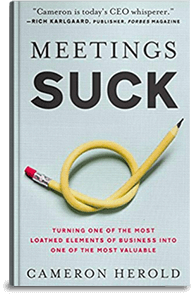
Meetings Suck: Turning One Of The Most Loathed Elements Of Business Into One Of The Most Valuable

We all know that meetings suck, right?

You hear it all the time. It’s the one thing that almost everyone in business can agree on.

Except it’s not actually true… 

Meetings don’t suck.

We just suck at running meetings.   

When done right, meetings not only work, they make people and companies better.

In Meetings Suck, world renowned business expert and growth guru Cameron Herold teaches you how to use focused, time effective meetings to help you and your company soar.

This book shows you immediately actionable, step-by-step systems that ensure that you and everyone in your organization improves your meetings, right away.

In the process, you’ll turn meetings that suck into meetings that work. 

In life, we always hear about people who’ve made huge decisions from their gut – without data.Today, I want you to make a decision, not only from your gut, but also from some data.  A decision that is only $12 per employee but will be priceless for your business.

Right now, your gut is telling you something is wrong with your company’s meetings.  You KNOW everyone complains about meetings.

People HATE going to them, they HATE running them, and they really have NO idea which meetings are truly necessary but they hold meetings simply because they think that is what they SHOULD do.

Even some of the smartest CEOs in the world complain about meetings – Elon Musk publicly told employees at Tesla & SpaceX to walk out of meetings if they weren’t being run properly.

I sent Elon a message saying that wasn’t going to fix anything – the key is to fix the root of the problem – NOT continue to ignore why meetings suck.

A Meeting is – Any phone call, video call or occasion where 2 or more people meet to discuss or work-through office topics.

Most employees on average spend 1-2 hours per day in meetings.

And likely, none of those employees – front-line staff or leaders – have had any training on how to attend meetings or participate in them, LET ALONE How to RUN THEM.

Consider this…

If the Average employee spends just 1 Hour per day in meetings – that’s 1/8th of their time.

If the Average employee earns $50,000 per year.

And they’re spending 1/8th of their time in meetings, that means you’re paying $6,250 dollars per year for just ONE employee to attend meetings.

The reality is, employees spend 1/8th of their time – and 1/8th of your company’s payroll – doing something they have literally NO idea how to do.

The Reality is…

95% of employees are booking & leading meetings – and they have NEVER been trained on how to run them.

95% of employees have had NO training on how to show up and participate in the meetings they attend daily.

And 95% of employees and companies have no idea what meetings are even necessary to hold.

Meetings CAN be hugely effective – IF you know how to run them

Meetings don’t SUCK, we just SUCK at running meetings. 

Investing $15 per employee – to help ensure the $50,000 a year you spend on them is an obvious and easy choice.

This could be the most impactful $15 you’ll ever spend and will save the company’s money, time and resources instantly.

Buying a copy of Meetings Suck for 100% of your employees and having them read it this month will have a huge impact on your company’s success.

book-5

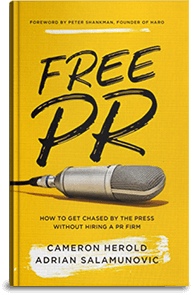
Free PR: How To Get Chased By The Press Without Hiring A PR Firm

Public relations has always been an essential part of doing business which is probably why you’re shelling out big money to an outside PR firm. But the truth is that you don’t need them. You already have all the necessary tools in-house to do as good a job as the so-called experts. 

Cameron Herold and Adrian Salamunovic have taught thousands of company execs how to exploit free media coverage and ditch these expensive, often ineffective outsiders. 

Cameron & Adrian have also built in-house PR teams, spent decades learning how to generate Free PR and how to leverage public relations to complement their sales and marketing strategy. 

In Free PR, you’ll learn how the media world operates while you gain invaluable insider knowledge and actionable advice on how to: 

  • Build your own in-house PR team
  • Provide effective interviews
  • Score great media coverage for free with just a few easy steps 

Landing public relations coverage for yourself and your company is a powerful tool to help elevate your personal brand. PR is easier to generate than marketing, PR is easier to leverage than marketing and PR is more cost effective than marketing. In other words, Public Relations is more critical than ever in growing your brand and your business. 

You’ve got more passion, commitment, a larger stake, and a deeper understanding of your business than any outside PR firm could ever have. So stop wasting money and take the reins yourself.  Learn the secrets to landing TONS of Free PR for your company.

What they’re saying:

“I think PR is the core for promoting any business. Public relations acquires customers! That’s what’s cool about this book.”

– Kevin O’Leary,  Shark on ABC’s Shark Tank

“The ultimate guidebook for those looking to get press, grow their brand, and get in front of the masses. Free PR is the roadmap you’ve been looking for.”

– Peter Shankman, Founder, Help a Reporter Out (HARO)

“Adrian and Cameron will show you the secrets of getting massive exposure for your business. This book is packed with actionable insights from two guys that actually know how to to do it.”

– Dan Martell,  Serial Entrepreneur & Investor (Intercom.io, Unbounce)

“I told Cameron to write the book on generating free PR. I’m excited to see that he’s finally sharing his secrets with the world. This is a must read for any entrepreneurial company and marketing team.”

– Verne Harnish, Founder of Entrepreneurs’ Organization (EO) and author of Scaling Up (Rockefeller Habits 2.0)

book-3-1

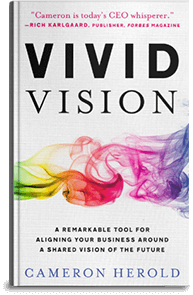
Vivid Vision: A Remarkable Tool For Aligning Your Business Around a Shared Vision of the Future

Many corporations have slick, flashy mission statements that ultimately do little to motivate employees and less to impress customers, investors, and partners. 

But there is a way to share your excitement for the future of your company in a clear, compelling, and powerful way and entrepreneur and business growth expert Cameron Herold can show you how. 

Vivid Vision is a revolutionary tool that will help owners, CEOs, and senior managers create inspirational, detailed, and actionable three-year mission statements for their companies. In this easy-to-follow guide, Herold walks organization leaders through the simple steps to creating their own Vivid Vision, from brainstorming to sharing the ideas to using the document to drive progress in the years to come. 

By focusing on mapping out how you see your company looking and feeling in every category of business, without getting bogged down by data and numbers or how it will happen, Vivid Vision creates a holistic road map to success that will get all of your teammates passionate about the big picture. 

Your company is your dream, one that you want to share with your staff, clients, and stakeholders. Vivid Vision is the tool you need to make that dream a reality.

miracle-morning

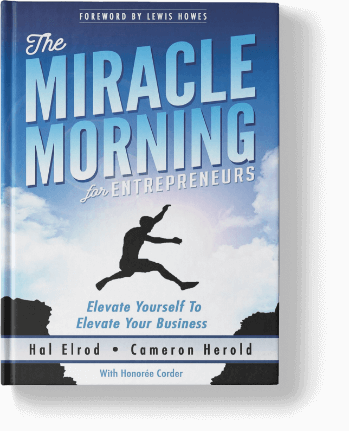
The Miracle Morning for
Entrepreneurs: Elevate Your SELF to
Elevate Your BUSINESS

READY FOR EXPLOSIVE GROWTH AS AN ENTREPRENEUR AND ACCELERATED SUCCESS IN THE REST OF YOUR LIFE?

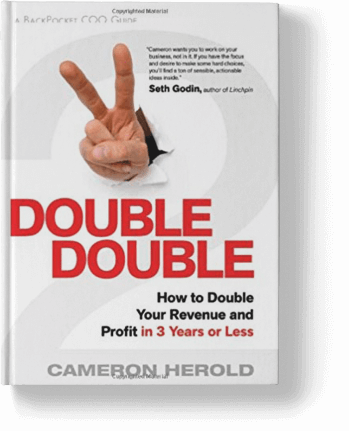
A step-by-step guide to enjoying the roller-coaster ride of growth — while getting the most out of life as an entrepreneur. A growth-focused approach: The book is divided into three sections, which cover planning for fast growth, building a company for fast growth, and leading for fast growth. Each topic the author covers — from creating a vision for the company’s future to learning how to generate free PR for a developing company — is squarely focused on the end goal: doubling the size of the entrepreneur’s company in three years or less. A down-to-earth action plan: Herold’s experienced-based advice never gets bogged down in generalities or theory. Instead, he offers a wealth of practical tips, including: How to design meetings for maximum efficiency; How to hire top-quality talent; How to grow in particularly tough markets; How to put together a board of advisors — even for a smaller company; How even the busy entrepreneur can achieve a work/life balance.

READY FOR EXPLOSIVE GROWTH AS AN ENTREPRENEUR AND ACCELERATED SUCCESS IN THE REST OF YOUR LIFE?

Hal Elrod’sThe Miracle Morning has helped redefine the mornings and the lives of millions of readers since 2012. Since then, careers have been launched, goals have been met, and dreams have been realized, all through the power of the Miracle Morning’s six Life S.A.V.E.R.S.

THESE SIX DAILY PRACTICES WILL FUEL YOUR EFFORTS TO CREATE AND SUSTAIN POSITIVE CHANGE IN YOUR LIFE.

Now The Miracle Morning for Entrepreneurs brings you these principles in a whole new light—alongside the Entrepreneurial Elevation Principles and the Entrepreneur’s Elevation Skills. These are essential skills that you need to create a successful business and personal life. Cameron Herold— Bestselling Author and a widely-respected expert on entrepreneurial mindset—brings his wisdom and insight to you using Hal Elrod’s powerful Miracle Morning framework.

DEVELOP A VISION FOR YOUR BUSINESS, AND BECOME THE INFLUENTIAL AND INSPIRING LEADER YOU WERE ALWAYS MEANT TO BE.

The principles and skills you’ll find in this book will help you to channel your passion and achieve balance in a remarkable new way. – Learn why mornings matter more than you think – Learn how to master your own self-leadership and accelerate your personal development – Learn how to manage your energy—physical, mental, and emotional – Learn how to implement Hal Elrod’s invaluable Life S.A.V.E.R.S. in your daily routine – And much more… You’re already an entrepreneur. Now discover how to take your success to the next level by first taking yourself to the next level. The Miracle Morning for Entrepreneurs is your roadmap to masterfully building an empire with a powerful vision, utilizing your areas of personal genius, with the right team at your side.

Start giving your business and your life the very best opportunities for success, right now.

A step-by-step guide to enjoying the roller-coaster ride of growth — while getting the most out of life as an entrepreneur. A growth-focused approach: The book is divided into three sections, which cover planning for fast growth, building a company for fast growth, and leading for fast growth. Each topic the author covers — from creating a vision for the company’s future to learning how to generate free PR for a developing company — is squarely focused on the end goal: doubling the size of the entrepreneur’s company in three years or less. A down-to-earth action plan: Herold’s experienced-based advice never gets bogged down in generalities or theory. Instead, he offers a wealth of practical tips, including: How to design meetings for maximum efficiency; How to hire top-quality talent; How to grow in particularly tough markets; How to put together a board of advisors — even for a smaller company; How even the busy entrepreneur can achieve a work/life balance.