Why Your Vision Statement Doesn’t Work
I have watched this ritual play out in dozens of companies. A leadership team gathers in a room, writes favorite words on a whiteboard, and then votes on which ones stay. Someone mashes the winning words into one sentence, and that sentence becomes the vision statement.
Nobody in that room believes it will align the team. They know it in the moment, because the process feels hokey and the result is usually one vague sentence that nobody can act on.
A Sentence Can’t Hold a Company
That sentence never tells the marketing department what to do this quarter. Nor does it tell sales what a win looks like, or describe what customers will be saying about the company a year from now. In short, one sentence is too small a container for a business.
So what does a vision need to specify:
- What each department is doing differently this quarter
- What customers are saying about the company
- What’s being written about it in the press
- What the office looks like, feels like, sounds like
A mission statement is a slogan, and a slogan was never built to carry that much weight.
Where the Better Model Came From
In the late 1990s, an Olympic coach told me how he trained athletes to visualize themselves performing their event before they ever stepped onto the field. Because that approach worked so well for athletes, I borrowed it for business. At 1-800-GOT-JUNK?, I used it to picture doubling the company’s revenue in three years. I didn’t yet know how we’d get there, but I knew exactly what it would look like when we did, and that picture is what I handed to the team.
That’s the difference. A vision statement tells people a destination exists, while a Vivid Vision puts them inside it, so they can see their own role in getting there.
Bottom Line
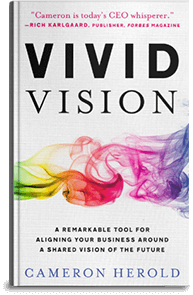
One sentence can’t align a company, but a world your team can walk into can. If you want the full exercise for building one, it’s laid out step by step in my book, Vivid Vision.