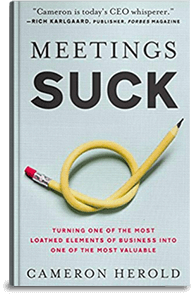
Many companies run meetings one calendar invite at a time, so none of them connect to the next. In Meetings Suck, I describe a stack of eight meetings, and each one has its own rhythm, length, and job.
The Stack at a Glance
Here is the cadence, from the most frequent meeting to the least:
- Daily huddle: 7 minutes, whole company, around 11:00 a.m. and 2:00 p.m.
- One-on-one: 30 to 60 minutes, weekly, usually on Mondays
- WAR meeting: 60 to 90 minutes, weekly, for the leadership team or a business area
- Strategy meeting: a couple of hours, weekly or semi-monthly
- Financial meeting: 60 minutes, monthly, everyone invited
- Business area review: half a day, quarterly
- Board of Advisors: 4 to 6 hours, quarterly
- Retreat: half a day to a full day quarterly, one to two days yearly
The Small Meetings Do the Daily Work
The huddle stays short because it runs on energy, so it opens with good news and anyone can praise a colleague. The one-on-one is the most consequential meeting in the stack, because it sets each person’s goals for the week. In the WAR meeting, each person then reviews last week’s goals and explains the hits and misses, which keeps everyone aware of what the rest of the team is working on.
The Big Meetings Reset the Direction
A quarterly retreat works like pressing the restart button, because the team reviews the yearly plan and matches it against the Vivid Vision. The Board of Advisors meeting opens with that same review, so everyone knows where the company is headed in three years. Meanwhile, the monthly financial meeting walks the whole company through the P&L line by line, comparing budget against what was spent. I recommend holding the yearly retreat three months before the new year starts.
Bottom Line
A healthy company runs these meetings on a schedule, because each one feeds the next. For the full agenda and format of every meeting in the stack, read my book, Meetings Suck.