Archives for December 2025

Revenue Is a Leadership Metric, Not Just a Finance One

Most companies don’t fail because they lack vision.

They fail because they stop paying attention to revenue early enough.

Bankruptcy rarely happens overnight.

It happens slowly, through ignored signals, optimistic forecasts, and leaders assuming “finance will handle it.”

Revenue is not just a CFO metric. It’s an operational responsibility.

Why Leaders Lose Control of Revenue

In growing companies, leadership attention often shifts toward expansion: new hires, new markets, new initiatives.

But when revenue discipline slips, scale turns dangerous.

Common warning signs include:

  • Strong activity with weak cash flow

  • Growing headcount without proportional revenue growth

  • Delayed decisions because “sales will catch up”

  • Operators focused on execution without visibility into financial reality

By the time revenue problems show up on the balance sheet, options are already limited.

Operational Leadership Is the First Line of Defense

Strong COOs and operational leaders stay close to revenue, even if they don’t own sales.

They ask:

  • Are we growing profitably or just growing?

  • Which parts of the business actually drive revenue?

  • Where are margins eroding operationally?

  • What decisions today could create cash pressure tomorrow?

Operational discipline protects the company long before finance sounds the alarm.

Why Cash Awareness Prevents Bankruptcy

Revenue pays for:

  • Talent

  • Systems

  • Growth

  • Optionality

When leaders lose visibility into cash and revenue flow, the business becomes fragile, no matter how strong the top-line story looks.

The most resilient companies are run by leaders who treat revenue as a daily operating reality, not a quarterly report.

Bottom Line

Growth without revenue discipline is not scale. It’s risk.

The companies that survive, and win, are led by operators who understand that execution, revenue, and cash are inseparable.

If you want to sharpen your operational judgment and learn how top COOs stay ahead of financial risk, join the COO Alliance — a private peer network where Seconds-in-Command learn directly from operators who’ve scaled, survived, and sustained growth.

Book your call

Operational Leadership: How to Inspire Your Team Without Being “the Voice of the Company”

In most organizations, the spotlight naturally falls on the CEO.

They are the public face of the brand: the storyteller, the visionary, the one delivering the message.

But behind every high-performing company, there is an operational leader quietly driving momentum.

The person translating strategy into execution, setting standards, and shaping how the work actually gets done.

You don’t need a microphone to inspire a team.
You need clarity, consistency, and leadership rooted in action.

What Operational Leaders Do Differently

Operational leadership isn’t about volume. It’s about impact.

The most effective operational leaders inspire their teams not by being the loudest voice in the room, but by being the most aligned, consistent, and dependable presence.

Here’s where they focus:

Turning vision into traction

You translate big ideas into clear systems, operating rhythms, and priorities the team can execute against every day.

Leading through standards, not slogans

People don’t follow speeches.
They follow leaders who model discipline, accountability, and follow-through, consistently.

How to Inspire Without the Spotlight

Operational influence is built through reinforcement, not announcements.

Create clarity at every level

Teams perform better when they know exactly what success looks like, how it’s measured, and why their work matters.

Celebrate execution wins

Calling out operational wins reinforces that excellence isn’t a one-time event — it’s a habit.

Stay connected to the front line

When you understand real constraints and challenges, your leadership becomes practical, relevant, and trusted.

Lead by removing friction

One of the most inspiring things a leader can do is make work easier.
Fewer bottlenecks create faster execution and higher morale.

Why This Leadership Style Works

Operational inspiration is quiet, but powerful.

People don’t remember the speech.
They remember the systems, support, and consistency that made their best work possible.

When teams trust the environment you’ve built, they bring more ownership, creativity, and drive into everything they do.

Bottom Line

You don’t need to be the public voice of the company to shape its culture or elevate performance.

The strongest operational leaders inspire through clarity, alignment, and execution, the kind of leadership that makes organizations move faster and smarter.

If you’re ready to strengthen your operational leadership and scale with confidence, explore the COO Alliance — the only private peer network built exclusively for Seconds-in-Command.

Book a call to know more.

Why Leadership Training Pays Off Faster Than You Think

When companies talk about leadership training, it often gets labeled as a “nice to have.”
Something you’ll invest in later — after the next product launch, after the next hire, after things “settle down.”

But things never really settle down. And waiting costs more than you think.

Because leadership training isn’t just about personal growth — it’s about operational speed.
It’s the difference between a team that moves on its own and a team that waits to be told what to do.

The Real ROI of Leadership Training

You can’t scale a company faster than you scale its leaders.

Most execution problems aren’t strategy problems — they’re leadership skill gaps.
When your managers can’t coach, delegate, or communicate clearly, it slows everything down.

That’s why leadership training delivers ROI faster than almost any other investment:

  • Projects finish on time. Managers know how to plan, align, and lead.

  • Communication improves. People stop waiting for instructions and start collaborating.

  • Turnover drops. Leaders who coach and connect keep talent longer.

  • Executives get time back. Because they’re no longer managing their managers.

Leadership training doesn’t just develop people — it compounds productivity.

Why Most Companies Wait Too Long

Many CEOs assume their managers will “figure it out.” But leadership isn’t instinctive.

You wouldn’t expect someone to run finance without training. So why expect them to lead people without it?

When leaders learn the right skills — how to delegate, coach, resolve conflict, and run effective meetings — performance rises immediately.

No 6-month lag. No complex rollout. Just better execution.

The Skills That Pay Off Fast

Here’s where the biggest wins usually show up:

  • Delegation. Work moves faster when people know exactly what’s expected.

  • Coaching. Teams start solving problems instead of escalating them.

  • Conflict Management. Issues get resolved early — before they drain energy.

  • Time Management. Managers spend less time reacting, more time leading.

  • Effective Meetings. Fewer updates, more decisions.

These aren’t abstract ideas — they’re tangible behaviors that drive results in weeks, not years.

Leadership Training as a Growth Strategy

You don’t train leaders because it’s nice. You train them because it’s necessary.

If you want your company to grow faster, your managers have to grow first. When they do, execution becomes smoother, communication sharper, and your culture stronger.

That’s the real ROI — momentum.

The Bottom Line

The companies that scale fastest don’t have smarter strategies — they have stronger leaders.
And the sooner you invest in them, the faster everything else starts working.

Build leaders who deliver results — not excuses.
In just 6 hours, Invest In Your Leaders teaches 12 proven leadership skills that pay off immediately in execution, culture, and performance.

The 3 Types of COOs — and How to Choose the Right One

Not all COOs are built the same. And that’s exactly why so many CEO–COO partnerships fail.

Founders often hire the “wrong” Second in Command — not because the person isn’t talented, but because they don’t match what the business truly needs.

Choosing the right COO isn’t about résumé. It’s about alignment.

Why Companies Hire the Wrong COO

Most CEOs don’t realize that “COO” is a shape-shifting role.

In one company, it means operations and execution. In another, it means finance and systems. In a third, it’s culture and people.

The mistake is assuming one type of COO can do it all. That’s like expecting your CFO to run sales and HR.

Before you hire, you need to know what kind of COO your company actually needs right now.

Type 1: The Builder

The Builder COO thrives in chaos.

They’re operators who love structure — process junkies who turn vision into systems. They come in when the company is scaling fast and needs discipline. They build dashboards, define metrics, and create clarity.

Perfect for:

  • Fast-growth startups

  • Founder-led companies moving from hustle to structure

  • Teams that need process without bureaucracy

The Builder is the one who takes your big vision — and makes it executable.

Type 2: The Stabilizer

The Stabilizer COO brings calm to the storm. They’re experts in consistency, culture, and accountability. When growth has already happened, but execution is uneven, they tighten things up.

They protect what’s working and refine what’s not.

Perfect for:

  • Companies between $10M–$100M in revenue

  • Teams that need operational maturity

  • CEOs who want sustainable, predictable growth

The Stabilizer doesn’t just build — they balance.

Type 3: The Scaler

The Scaler COO is a strategic partner — part operator, part architect. They think like a CEO, but act like a systems engineer.

Scalers thrive when the company is ready to expand into new markets, new lines of business, or acquisitions. They’re masters of complexity and organizational design.

Perfect for:

  • Global or multi-division companies

  • CEOs preparing for major expansion

  • Organizations where the next leap requires deep alignment

The Scaler doesn’t just run the business — they redesign it for growth.

How to Choose the Right One

Here’s the rule:

Don’t hire the COO you want — hire the one your company needs right now.

Ask yourself:

  • What are my biggest operational gaps?

  • Where do I spend the most time as CEO?

  • Do I need a fixer, a finisher, or a future-builder?

Once you know that, the right candidate becomes obvious.

The Bottom Line

Hiring a COO isn’t about adding another executive — it’s about finding your counterpart.
The one who complements your strengths, covers your blind spots, and makes your company run like a machine.

Get that match right, and you’ll finally have the freedom to focus on the vision — while your Second in Command drives execution.

Learn how to find, hire, and lead the perfect COO for your stage of growth.
Get your copy of The Second in Command — Cameron Herold’s definitive guide to unlocking growth through the right CEO–COO partnership.

The Leadership Systems That Scale Culture — Not Just Growth

Growth is exciting — until it breaks what made your company special.

You hire fast. You expand into new markets. And before long, the culture that once felt tight, connected, and full of energy starts to drift.

Suddenly, things feel… corporate. Slower. Less human.

That’s not a people problem — it’s a systems problem. And great leaders know how to fix it.

Culture Isn’t Built — It’s Scaled

Most leaders think of culture as something you create. But the truth is, you already have one.

The real question is whether it will survive growth.

As teams expand, informal habits stop working.
Communication breaks down. Values get diluted.

That’s when culture becomes accidental — unless you have systems to protect it.

The COO’s Secret Weapon: Structure

Culture doesn’t scale through slogans or Slack channels.
It scales through structure — the rhythms and systems that reinforce what your company stands for.

Here’s what that looks like in practice:

  • Weekly meetings that start with wins and values.

  • Hiring processes that screen for alignment, not just skill.

  • Training programs that teach leadership consistency.

  • A cadence of communication that keeps everyone connected.

Structure is what keeps your culture alive when the company outgrows proximity.

The Myth of Culture “Fit”

Hiring for “fit” often turns into hiring people who feel familiar. That’s how diversity — of thought, background, and creativity — gets lost.

Instead, great leaders hire for values alignment. They look for people who share the why, not the how.

Because culture isn’t about everyone being the same. It’s about everyone believing in the same purpose.

How to Keep Culture Strong as You Scale

  1. Codify your values early.
    Don’t wait until 100 employees to define what matters.

  2. Communicate relentlessly.
    Repeat your vision and values until they become muscle memory.

  3. Invest in leadership development.
    Culture erodes when managers don’t model it.

  4. Stay close to the team.
    As the company grows, the CEO’s visibility shrinks — unless you make connection intentional.

Culture doesn’t scale by accident. It scales by design.

The Bottom Line

Scaling isn’t just about revenue or reach. It’s about consistency — in leadership, in communication, and in how people treat each other.

Systems don’t kill culture. They protect it.

When leaders build rhythm around values, culture becomes your greatest competitive advantage.

Join the only global network where COOs scale both operations and culture.
Connect with top operational leaders from 17+ countries inside the COO Alliance — and learn how to build systems that grow your people and your performance.

How Great Leaders Create Calm in Chaos

Every company hits turbulence. Markets shift. Projects go sideways. Teams burn out.

The difference between a team that panics and a team that performs isn’t luck — it’s leadership.

When everything feels uncertain, people don’t look for perfect plans. They look for calm.

And calm leaders don’t ignore chaos — they organize it.

Pressure Reveals Leadership, It Doesn’t Build It

Anyone can lead when things are going well. But when pressure hits, real leadership shows up.

That’s when communication, trust, and composure matter most.
Because your team doesn’t just listen to what you say — they absorb what you feel.

If you’re anxious, they’ll mirror it. If you’re calm, they’ll steady themselves.

Your energy sets the tone for the entire company.

Why Leaders Lose Calm (and How to Regain It)

Most leaders don’t mean to create chaos. They just react to it.

  • They rush to fix problems before listening.

  • They flood the team with new priorities instead of clarity.

  • They confuse activity with progress.

But the best leaders don’t add noise — they reduce it. They pause, observe, and focus on what actually matters. They turn uncertainty into direction.

The Skills That Keep You Grounded Under Pressure

Staying calm isn’t about personality. It’s about practice.

Great leaders train themselves — and their teams — to respond instead of react.
Here’s how:

  • Master communication. The right words at the right time prevent panic.

  • Coach your people. Help them problem-solve instead of firefight.

  • Run meetings with intention. Replace chaos with structure and rhythm.

  • Manage your time. Prioritize what moves the company forward — not what screams loudest.

These aren’t traits you’re born with — they’re skills you can build.

The Ripple Effect of Calm Leadership

When a leader stays grounded, the entire company becomes more resilient.

People take ownership instead of waiting for orders.Decisions become deliberate, not emotional. And performance improves — even when pressure rises.

Calm doesn’t mean passive. It means powerful, intentional, and composed.

It’s what separates managers from true leaders.

The Bottom Line

Chaos is inevitable. But stress is optional — if your leaders know how to lead through it.

Train your managers to stay calm, think clearly, and communicate with impact.
Because the calmer your leaders are, the faster your company grows.

Build leaders who stay calm under pressure — and lead with confidence.
In just 6 hours, Invest In Your Leaders teaches 12 proven leadership skills that help your managers handle pressure, make better decisions, and keep your team aligned through any storm.

book-4

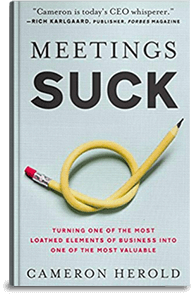
Meetings Suck: Turning One Of The Most Loathed Elements Of Business Into One Of The Most Valuable

We all know that meetings suck, right?

You hear it all the time. It’s the one thing that almost everyone in business can agree on.

Except it’s not actually true… 

Meetings don’t suck.

We just suck at running meetings.   

When done right, meetings not only work, they make people and companies better.

In Meetings Suck, world renowned business expert and growth guru Cameron Herold teaches you how to use focused, time effective meetings to help you and your company soar.

This book shows you immediately actionable, step-by-step systems that ensure that you and everyone in your organization improves your meetings, right away.

In the process, you’ll turn meetings that suck into meetings that work. 

In life, we always hear about people who’ve made huge decisions from their gut – without data.Today, I want you to make a decision, not only from your gut, but also from some data.  A decision that is only $12 per employee but will be priceless for your business.

Right now, your gut is telling you something is wrong with your company’s meetings.  You KNOW everyone complains about meetings.

People HATE going to them, they HATE running them, and they really have NO idea which meetings are truly necessary but they hold meetings simply because they think that is what they SHOULD do.

Even some of the smartest CEOs in the world complain about meetings – Elon Musk publicly told employees at Tesla & SpaceX to walk out of meetings if they weren’t being run properly.

I sent Elon a message saying that wasn’t going to fix anything – the key is to fix the root of the problem – NOT continue to ignore why meetings suck.

A Meeting is – Any phone call, video call or occasion where 2 or more people meet to discuss or work-through office topics.

Most employees on average spend 1-2 hours per day in meetings.

And likely, none of those employees – front-line staff or leaders – have had any training on how to attend meetings or participate in them, LET ALONE How to RUN THEM.

Consider this…

If the Average employee spends just 1 Hour per day in meetings – that’s 1/8th of their time.

If the Average employee earns $50,000 per year.

And they’re spending 1/8th of their time in meetings, that means you’re paying $6,250 dollars per year for just ONE employee to attend meetings.

The reality is, employees spend 1/8th of their time – and 1/8th of your company’s payroll – doing something they have literally NO idea how to do.

The Reality is…

95% of employees are booking & leading meetings – and they have NEVER been trained on how to run them.

95% of employees have had NO training on how to show up and participate in the meetings they attend daily.

And 95% of employees and companies have no idea what meetings are even necessary to hold.

Meetings CAN be hugely effective – IF you know how to run them

Meetings don’t SUCK, we just SUCK at running meetings. 

Investing $15 per employee – to help ensure the $50,000 a year you spend on them is an obvious and easy choice.

This could be the most impactful $15 you’ll ever spend and will save the company’s money, time and resources instantly.

Buying a copy of Meetings Suck for 100% of your employees and having them read it this month will have a huge impact on your company’s success.

book-5

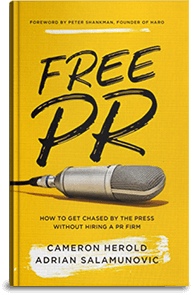
Free PR: How To Get Chased By The Press Without Hiring A PR Firm

Public relations has always been an essential part of doing business which is probably why you’re shelling out big money to an outside PR firm. But the truth is that you don’t need them. You already have all the necessary tools in-house to do as good a job as the so-called experts. 

Cameron Herold and Adrian Salamunovic have taught thousands of company execs how to exploit free media coverage and ditch these expensive, often ineffective outsiders. 

Cameron & Adrian have also built in-house PR teams, spent decades learning how to generate Free PR and how to leverage public relations to complement their sales and marketing strategy. 

In Free PR, you’ll learn how the media world operates while you gain invaluable insider knowledge and actionable advice on how to: 

  • Build your own in-house PR team
  • Provide effective interviews
  • Score great media coverage for free with just a few easy steps 

Landing public relations coverage for yourself and your company is a powerful tool to help elevate your personal brand. PR is easier to generate than marketing, PR is easier to leverage than marketing and PR is more cost effective than marketing. In other words, Public Relations is more critical than ever in growing your brand and your business. 

You’ve got more passion, commitment, a larger stake, and a deeper understanding of your business than any outside PR firm could ever have. So stop wasting money and take the reins yourself.  Learn the secrets to landing TONS of Free PR for your company.

What they’re saying:

“I think PR is the core for promoting any business. Public relations acquires customers! That’s what’s cool about this book.”

– Kevin O’Leary,  Shark on ABC’s Shark Tank

“The ultimate guidebook for those looking to get press, grow their brand, and get in front of the masses. Free PR is the roadmap you’ve been looking for.”

– Peter Shankman, Founder, Help a Reporter Out (HARO)

“Adrian and Cameron will show you the secrets of getting massive exposure for your business. This book is packed with actionable insights from two guys that actually know how to to do it.”

– Dan Martell,  Serial Entrepreneur & Investor (Intercom.io, Unbounce)

“I told Cameron to write the book on generating free PR. I’m excited to see that he’s finally sharing his secrets with the world. This is a must read for any entrepreneurial company and marketing team.”

– Verne Harnish, Founder of Entrepreneurs’ Organization (EO) and author of Scaling Up (Rockefeller Habits 2.0)

book-3-1

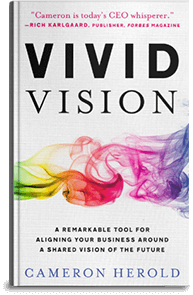
Vivid Vision: A Remarkable Tool For Aligning Your Business Around a Shared Vision of the Future

Many corporations have slick, flashy mission statements that ultimately do little to motivate employees and less to impress customers, investors, and partners. 

But there is a way to share your excitement for the future of your company in a clear, compelling, and powerful way and entrepreneur and business growth expert Cameron Herold can show you how. 

Vivid Vision is a revolutionary tool that will help owners, CEOs, and senior managers create inspirational, detailed, and actionable three-year mission statements for their companies. In this easy-to-follow guide, Herold walks organization leaders through the simple steps to creating their own Vivid Vision, from brainstorming to sharing the ideas to using the document to drive progress in the years to come. 

By focusing on mapping out how you see your company looking and feeling in every category of business, without getting bogged down by data and numbers or how it will happen, Vivid Vision creates a holistic road map to success that will get all of your teammates passionate about the big picture. 

Your company is your dream, one that you want to share with your staff, clients, and stakeholders. Vivid Vision is the tool you need to make that dream a reality.

miracle-morning

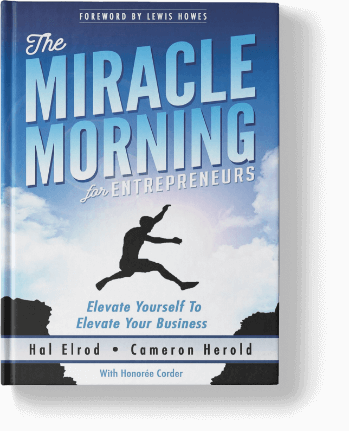
The Miracle Morning for
Entrepreneurs: Elevate Your SELF to
Elevate Your BUSINESS

READY FOR EXPLOSIVE GROWTH AS AN ENTREPRENEUR AND ACCELERATED SUCCESS IN THE REST OF YOUR LIFE?

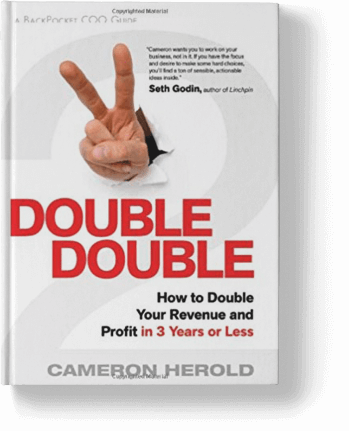
A step-by-step guide to enjoying the roller-coaster ride of growth — while getting the most out of life as an entrepreneur. A growth-focused approach: The book is divided into three sections, which cover planning for fast growth, building a company for fast growth, and leading for fast growth. Each topic the author covers — from creating a vision for the company’s future to learning how to generate free PR for a developing company — is squarely focused on the end goal: doubling the size of the entrepreneur’s company in three years or less. A down-to-earth action plan: Herold’s experienced-based advice never gets bogged down in generalities or theory. Instead, he offers a wealth of practical tips, including: How to design meetings for maximum efficiency; How to hire top-quality talent; How to grow in particularly tough markets; How to put together a board of advisors — even for a smaller company; How even the busy entrepreneur can achieve a work/life balance.

READY FOR EXPLOSIVE GROWTH AS AN ENTREPRENEUR AND ACCELERATED SUCCESS IN THE REST OF YOUR LIFE?

Hal Elrod’sThe Miracle Morning has helped redefine the mornings and the lives of millions of readers since 2012. Since then, careers have been launched, goals have been met, and dreams have been realized, all through the power of the Miracle Morning’s six Life S.A.V.E.R.S.

THESE SIX DAILY PRACTICES WILL FUEL YOUR EFFORTS TO CREATE AND SUSTAIN POSITIVE CHANGE IN YOUR LIFE.

Now The Miracle Morning for Entrepreneurs brings you these principles in a whole new light—alongside the Entrepreneurial Elevation Principles and the Entrepreneur’s Elevation Skills. These are essential skills that you need to create a successful business and personal life. Cameron Herold— Bestselling Author and a widely-respected expert on entrepreneurial mindset—brings his wisdom and insight to you using Hal Elrod’s powerful Miracle Morning framework.

DEVELOP A VISION FOR YOUR BUSINESS, AND BECOME THE INFLUENTIAL AND INSPIRING LEADER YOU WERE ALWAYS MEANT TO BE.

The principles and skills you’ll find in this book will help you to channel your passion and achieve balance in a remarkable new way. – Learn why mornings matter more than you think – Learn how to master your own self-leadership and accelerate your personal development – Learn how to manage your energy—physical, mental, and emotional – Learn how to implement Hal Elrod’s invaluable Life S.A.V.E.R.S. in your daily routine – And much more… You’re already an entrepreneur. Now discover how to take your success to the next level by first taking yourself to the next level. The Miracle Morning for Entrepreneurs is your roadmap to masterfully building an empire with a powerful vision, utilizing your areas of personal genius, with the right team at your side.

Start giving your business and your life the very best opportunities for success, right now.

A step-by-step guide to enjoying the roller-coaster ride of growth — while getting the most out of life as an entrepreneur. A growth-focused approach: The book is divided into three sections, which cover planning for fast growth, building a company for fast growth, and leading for fast growth. Each topic the author covers — from creating a vision for the company’s future to learning how to generate free PR for a developing company — is squarely focused on the end goal: doubling the size of the entrepreneur’s company in three years or less. A down-to-earth action plan: Herold’s experienced-based advice never gets bogged down in generalities or theory. Instead, he offers a wealth of practical tips, including: How to design meetings for maximum efficiency; How to hire top-quality talent; How to grow in particularly tough markets; How to put together a board of advisors — even for a smaller company; How even the busy entrepreneur can achieve a work/life balance.