Archives for November 2025

Why Most Entrepreneurs Don’t Scale Past $10 Million

Every founder wants to scale. But very few make it past the $10 million mark.

Not because they run out of opportunity — but because they run out of capacity.

At that stage, the same traits that made you successful (speed, control, obsession with detail) start holding you back. 

You can’t run every meeting, make every decision, or manage every person anymore.

Growth exposes the limits of founder-driven leadership.

The Founder Ceiling

In the early years, hustle works. You can outwork the competition, stay close to customers, and make calls on instinct.

But once your company hits scale, what used to be your strength becomes your bottleneck.

You move from leading five people to fifty. Every decision slows down. And instead of building the business, you’re busy running it.

That’s the founder ceiling — the point where the company’s growth outpaces the founder’s bandwidth.

Why Most Founders Get Stuck

Here’s what happens next:

  1. They keep too many decisions.
    The CEO tries to stay involved in everything. Execution starts to break.

  2. They hire operators too late.
    By the time they bring in help, the team is already overwhelmed.

  3. They never define the “how.”
    The vision is big, but the execution plan is fuzzy — and nobody owns it.

  4. They confuse delegation with dumping.
    Work gets handed off, but without clarity or authority.

Eventually, the founder hits a wall. And the company stops growing — not because of the market, but because of leadership design.

The Shift That Unlocks Scale

The real turning point comes when the CEO realizes this:

“Scaling doesn’t mean doing more. It means building the team that can.”

That’s when it’s time to hire a Second in Command — a COO who can translate your vision into structure, systems, and sustainable execution.

When done right, this partnership becomes a multiplier:

  • The CEO focuses outward — on growth, vision, and brand.

  • The COO focuses inward — on operations, people, and delivery.

Together, they build something neither could build alone.

The Cost of Waiting Too Long

Most founders wait until they’re exhausted to make that hire. By then, culture has slipped, systems are messy, and execution is inconsistent.

But when you hire your COO proactively — before chaos hits — you protect your energy, your team, and your company’s potential.

That’s how you break through the $10 million ceiling.

The Bottom Line

Scaling isn’t about working harder. It’s about designing a company that can run without you in every detail.

If you want to build something that grows faster than your calendar, you need a true partner in execution — your Second in Command.

Learn how to hire, lead, and maximize your COO — the partner who helps you scale past your ceiling.

Get your copy of The Second in Command — Cameron Herold’s step-by-step guide to building a CEO–COO partnership that scales your business without burning you out.
The Real Reason Your Team Isn’t Accountable

You set clear goals. You repeat expectations in every meeting. You follow up — again and again.

And still, things slip. Deadlines move. Ownership fades.

It’s easy to assume it’s a motivation problem. It’s not.

It’s a leadership problem.

Accountability Starts at the Top

Most leaders think accountability means following up. In reality, accountability means following through.

It’s not about chasing updates — it’s about creating clarity, consistency, and confidence from the start.

The reason your team isn’t accountable usually comes down to one of three things:

  1. They don’t fully understand what success looks like.

  2. They aren’t clear on who owns what.

  3. They don’t have a leader who models accountability themselves.

You can’t expect ownership from people who aren’t sure what “done” actually means.

Why Accountability Systems Fail

Most leaders try to fix accountability with tools. They add dashboards, trackers, and OKRs.

But tools don’t create accountability — behavior does. And behavior comes from culture.

A culture of accountability isn’t about pressure or punishment. It’s about trust, clarity, and rhythm.

When expectations are clear, communication is open, and leaders follow through on commitments, accountability becomes second nature.

The Leadership Skills That Build Accountability

If you want your team to take ownership, start by training your leaders to lead differently.
The best COOs and CEOs know accountability comes from habits, not policies.

Here’s what those habits look like:

  • Coaching instead of correcting. Help people think through solutions instead of assigning blame.

  • Running effective 1:1s. Regular touchpoints turn accountability into partnership.

  • Delegating with clarity. Vague tasks produce vague results.

  • Following up with intention. When leaders check in with purpose, people rise to meet it.

You can’t build accountability through reminders. You build it through leadership.

The Ripple Effect of True Accountability

When accountability takes hold, everything changes.

Meetings get shorter, deadlines stick, performance reviews get easier, and culture gets stronger — because people trust each other to deliver.

That’s when execution starts to feel effortless.

The Bottom Line

Your team isn’t broken. They’re just missing the structure — and leadership habits — that make accountability possible.

Train your managers to communicate clearly, delegate effectively, and lead with follow-through.
Because when your leaders own it, your teams will too.

Build a culture where accountability drives results — not stress.
Train your managers in the 12 essential leadership skills inside Invest In Your Leaders and turn ownership into your company’s default mode.

How to Stop Being the Bottleneck in Your Own Company

If every decision still runs through you, you don’t own a business — you run a system built around your inbox.

It’s a common trap for founders and CEOs. You hire great people. You delegate tasks. But somehow, everything still flows back to you.

Deadlines stall. Teams wait. And you start to wonder — “why can’t my people just figure it out?”

The truth: they probably could… if you’d stop being the bottleneck.

Why Founders Get Stuck in the Bottleneck Trap

When you start your company, you wear every hat. Sales, ops, marketing, finance — you know how everything works.

But as you scale, that instinct to control everything becomes a liability. Your team stops making decisions because you always jump in to fix them.

And soon, you’re managing people instead of building leaders. That’s not scaling — that’s stalling.

The Leadership Shift That Changes Everything

Great CEOs and COOs don’t just delegate tasks — they delegate thinking.

That means giving your team context, trust, and ownership — not just instructions.

When your leaders know the “why,” they don’t need you to approve every “how.”
They make smart decisions faster and they start to lead like owners, not employees.

If You’re Still the Bottleneck, Look Here First

  1. Your managers lack leadership training.
    Most have never been taught how to coach, delegate, or run meetings effectively.
    Without those skills, they default to waiting for direction.

  2. You haven’t clarified decision rights.
    If your team doesn’t know what they can decide — they’ll assume it’s nothing.

  3. You reward firefighting instead of foresight.
    Every time you step in to “save the day,” you reinforce dependency.

  4. You haven’t built leaders — you’ve built doers.
    Execution doesn’t scale until your people learn how to lead others.

How to Fix It

If you want to stop being the bottleneck, stop being the hero.
Your real job is to build leaders who don’t need you. That starts with training.

Not on strategy or spreadsheets — but on leadership behaviors:

  • Coaching people to think independently

  • Running meetings that drive accountability

  • Delegating with clarity

  • Managing conflict before it becomes chaos

Once your leaders master those skills, everything changes.
Decisions speed up, bottlenecks disappear, and you finally get your time — and your company — back.

The Bottom Line

If you feel like your team can’t move without you, the problem isn’t them — it’s your systems and your leadership depth.

Stop trying to do more. Start training the people who can do it with you.

Train your managers to think, act, and lead — not wait.

In just 6 hours, Invest In Your Leaders teaches the 12 core leadership skills that eliminate bottlenecks and free you to focus on growth, not micromanagement.

Why Most Vision Statements Fail (and How to Fix Yours)

Most companies have a “vision statement.” It sounds nice. It checks the box. And then… it disappears into a slide deck no one reads again.

The truth? Most vision statements don’t fail because people don’t care — they fail because they don’t connect. They’re too vague to inspire action and too generic to create alignment.

A powerful vision shouldn’t sound like something that could belong to any company. It should sound like you.

The Problem with Traditional Vision Statements

Here’s how most leaders write a vision:
They gather the executive team, brainstorm for an hour, throw around some buzzwords, and land on something like —

“To be the leading provider of innovative solutions that delight our customers.”

That sentence could describe a coffee shop, a tech company, or a moving truck rental service.
It doesn’t paint a picture. It doesn’t make you feel anything.

And that’s exactly why it fails.

Your team can’t align behind something they can’t visualize. Investors can’t get excited about something they can’t imagine. And customers won’t believe in something that doesn’t sound real.

What a Vision Should Actually Do

A real vision statement — what I call a Vivid Vision® — isn’t a sentence. It’s a story.

It describes your company three years in the future as if it already happened. You’re not writing what you hope will happen — you’re writing what you see.

  • You describe what your culture feels like
  • What your office looks like
  • How your customers talk about you
  • What media is saying about your success
  • How it feels to work there every day

It’s not a slogan. It’s a snapshot of your future reality.

How to Create a Vivid Vision That Actually Works

Step out of your day-to-day for a moment. Find a quiet space. And imagine your company three years from now — not one, not five, but three.

Then, write it out in detail:

  • What does the business look and feel like?

  • How do people describe working there?

  • What does success actually look like from the outside?

Once you’ve written it, share it — everywhere.
Print it. Present it. Read it to your team. Get your leaders to internalize it so deeply that they start making decisions through it.

That’s when the magic happens. Your people stop working toward vague goals — and start building the same future.

Why It Matters More Than Ever

Today’s teams crave meaning and direction. If they don’t know where the company is going, they’ll start guessing — and those guesses will all point in different directions.

A Vivid Vision fixes that.It gives your company a shared language for the future. It replaces confusion with clarity, and anxiety with excitement.

When everyone sees the same future, alignment becomes automatic.
That’s how great cultures form — not from slogans, but from shared vision.

The Bottom Line

A vision statement isn’t meant to decorate your website. It’s meant to pull your company forward.

The difference between a good business and a great one often comes down to this: One has a plan. The other has a picture.

If you want your people to believe in where you’re going — show them.

Learn how to write a vision so clear it pulls your team forward — step by step inside Vivid Vision by Cameron Herold.

Discover how to turn your dream for the company into a three-year roadmap everyone can see, feel, and act on today.

book-4

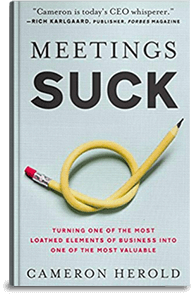
Meetings Suck: Turning One Of The Most Loathed Elements Of Business Into One Of The Most Valuable

We all know that meetings suck, right?

You hear it all the time. It’s the one thing that almost everyone in business can agree on.

Except it’s not actually true… 

Meetings don’t suck.

We just suck at running meetings.   

When done right, meetings not only work, they make people and companies better.

In Meetings Suck, world renowned business expert and growth guru Cameron Herold teaches you how to use focused, time effective meetings to help you and your company soar.

This book shows you immediately actionable, step-by-step systems that ensure that you and everyone in your organization improves your meetings, right away.

In the process, you’ll turn meetings that suck into meetings that work. 

In life, we always hear about people who’ve made huge decisions from their gut – without data.Today, I want you to make a decision, not only from your gut, but also from some data.  A decision that is only $12 per employee but will be priceless for your business.

Right now, your gut is telling you something is wrong with your company’s meetings.  You KNOW everyone complains about meetings.

People HATE going to them, they HATE running them, and they really have NO idea which meetings are truly necessary but they hold meetings simply because they think that is what they SHOULD do.

Even some of the smartest CEOs in the world complain about meetings – Elon Musk publicly told employees at Tesla & SpaceX to walk out of meetings if they weren’t being run properly.

I sent Elon a message saying that wasn’t going to fix anything – the key is to fix the root of the problem – NOT continue to ignore why meetings suck.

A Meeting is – Any phone call, video call or occasion where 2 or more people meet to discuss or work-through office topics.

Most employees on average spend 1-2 hours per day in meetings.

And likely, none of those employees – front-line staff or leaders – have had any training on how to attend meetings or participate in them, LET ALONE How to RUN THEM.

Consider this…

If the Average employee spends just 1 Hour per day in meetings – that’s 1/8th of their time.

If the Average employee earns $50,000 per year.

And they’re spending 1/8th of their time in meetings, that means you’re paying $6,250 dollars per year for just ONE employee to attend meetings.

The reality is, employees spend 1/8th of their time – and 1/8th of your company’s payroll – doing something they have literally NO idea how to do.

The Reality is…

95% of employees are booking & leading meetings – and they have NEVER been trained on how to run them.

95% of employees have had NO training on how to show up and participate in the meetings they attend daily.

And 95% of employees and companies have no idea what meetings are even necessary to hold.

Meetings CAN be hugely effective – IF you know how to run them

Meetings don’t SUCK, we just SUCK at running meetings. 

Investing $15 per employee – to help ensure the $50,000 a year you spend on them is an obvious and easy choice.

This could be the most impactful $15 you’ll ever spend and will save the company’s money, time and resources instantly.

Buying a copy of Meetings Suck for 100% of your employees and having them read it this month will have a huge impact on your company’s success.

book-5

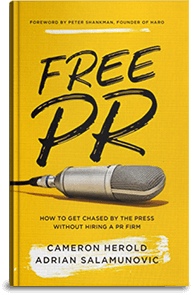
Free PR: How To Get Chased By The Press Without Hiring A PR Firm

Public relations has always been an essential part of doing business which is probably why you’re shelling out big money to an outside PR firm. But the truth is that you don’t need them. You already have all the necessary tools in-house to do as good a job as the so-called experts. 

Cameron Herold and Adrian Salamunovic have taught thousands of company execs how to exploit free media coverage and ditch these expensive, often ineffective outsiders. 

Cameron & Adrian have also built in-house PR teams, spent decades learning how to generate Free PR and how to leverage public relations to complement their sales and marketing strategy. 

In Free PR, you’ll learn how the media world operates while you gain invaluable insider knowledge and actionable advice on how to: 

  • Build your own in-house PR team
  • Provide effective interviews
  • Score great media coverage for free with just a few easy steps 

Landing public relations coverage for yourself and your company is a powerful tool to help elevate your personal brand. PR is easier to generate than marketing, PR is easier to leverage than marketing and PR is more cost effective than marketing. In other words, Public Relations is more critical than ever in growing your brand and your business. 

You’ve got more passion, commitment, a larger stake, and a deeper understanding of your business than any outside PR firm could ever have. So stop wasting money and take the reins yourself.  Learn the secrets to landing TONS of Free PR for your company.

What they’re saying:

“I think PR is the core for promoting any business. Public relations acquires customers! That’s what’s cool about this book.”

– Kevin O’Leary,  Shark on ABC’s Shark Tank

“The ultimate guidebook for those looking to get press, grow their brand, and get in front of the masses. Free PR is the roadmap you’ve been looking for.”

– Peter Shankman, Founder, Help a Reporter Out (HARO)

“Adrian and Cameron will show you the secrets of getting massive exposure for your business. This book is packed with actionable insights from two guys that actually know how to to do it.”

– Dan Martell,  Serial Entrepreneur & Investor (Intercom.io, Unbounce)

“I told Cameron to write the book on generating free PR. I’m excited to see that he’s finally sharing his secrets with the world. This is a must read for any entrepreneurial company and marketing team.”

– Verne Harnish, Founder of Entrepreneurs’ Organization (EO) and author of Scaling Up (Rockefeller Habits 2.0)

book-3-1

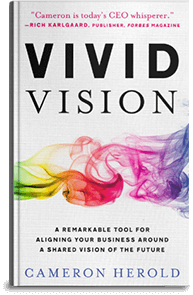
Vivid Vision: A Remarkable Tool For Aligning Your Business Around a Shared Vision of the Future

Many corporations have slick, flashy mission statements that ultimately do little to motivate employees and less to impress customers, investors, and partners. 

But there is a way to share your excitement for the future of your company in a clear, compelling, and powerful way and entrepreneur and business growth expert Cameron Herold can show you how. 

Vivid Vision is a revolutionary tool that will help owners, CEOs, and senior managers create inspirational, detailed, and actionable three-year mission statements for their companies. In this easy-to-follow guide, Herold walks organization leaders through the simple steps to creating their own Vivid Vision, from brainstorming to sharing the ideas to using the document to drive progress in the years to come. 

By focusing on mapping out how you see your company looking and feeling in every category of business, without getting bogged down by data and numbers or how it will happen, Vivid Vision creates a holistic road map to success that will get all of your teammates passionate about the big picture. 

Your company is your dream, one that you want to share with your staff, clients, and stakeholders. Vivid Vision is the tool you need to make that dream a reality.

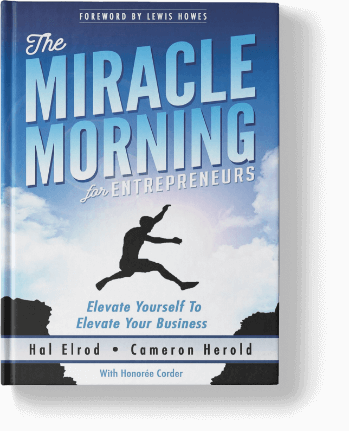
miracle-morning

The Miracle Morning for
Entrepreneurs: Elevate Your SELF to
Elevate Your BUSINESS

READY FOR EXPLOSIVE GROWTH AS AN ENTREPRENEUR AND ACCELERATED SUCCESS IN THE REST OF YOUR LIFE?

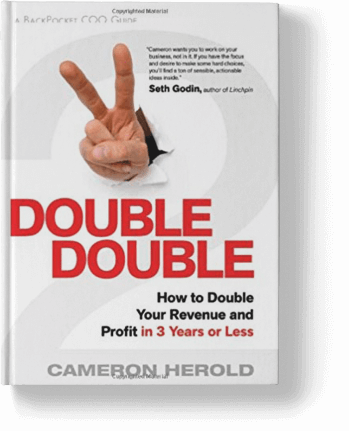
A step-by-step guide to enjoying the roller-coaster ride of growth — while getting the most out of life as an entrepreneur. A growth-focused approach: The book is divided into three sections, which cover planning for fast growth, building a company for fast growth, and leading for fast growth. Each topic the author covers — from creating a vision for the company’s future to learning how to generate free PR for a developing company — is squarely focused on the end goal: doubling the size of the entrepreneur’s company in three years or less. A down-to-earth action plan: Herold’s experienced-based advice never gets bogged down in generalities or theory. Instead, he offers a wealth of practical tips, including: How to design meetings for maximum efficiency; How to hire top-quality talent; How to grow in particularly tough markets; How to put together a board of advisors — even for a smaller company; How even the busy entrepreneur can achieve a work/life balance.

READY FOR EXPLOSIVE GROWTH AS AN ENTREPRENEUR AND ACCELERATED SUCCESS IN THE REST OF YOUR LIFE?

Hal Elrod’sThe Miracle Morning has helped redefine the mornings and the lives of millions of readers since 2012. Since then, careers have been launched, goals have been met, and dreams have been realized, all through the power of the Miracle Morning’s six Life S.A.V.E.R.S.

THESE SIX DAILY PRACTICES WILL FUEL YOUR EFFORTS TO CREATE AND SUSTAIN POSITIVE CHANGE IN YOUR LIFE.

Now The Miracle Morning for Entrepreneurs brings you these principles in a whole new light—alongside the Entrepreneurial Elevation Principles and the Entrepreneur’s Elevation Skills. These are essential skills that you need to create a successful business and personal life. Cameron Herold— Bestselling Author and a widely-respected expert on entrepreneurial mindset—brings his wisdom and insight to you using Hal Elrod’s powerful Miracle Morning framework.

DEVELOP A VISION FOR YOUR BUSINESS, AND BECOME THE INFLUENTIAL AND INSPIRING LEADER YOU WERE ALWAYS MEANT TO BE.

The principles and skills you’ll find in this book will help you to channel your passion and achieve balance in a remarkable new way. – Learn why mornings matter more than you think – Learn how to master your own self-leadership and accelerate your personal development – Learn how to manage your energy—physical, mental, and emotional – Learn how to implement Hal Elrod’s invaluable Life S.A.V.E.R.S. in your daily routine – And much more… You’re already an entrepreneur. Now discover how to take your success to the next level by first taking yourself to the next level. The Miracle Morning for Entrepreneurs is your roadmap to masterfully building an empire with a powerful vision, utilizing your areas of personal genius, with the right team at your side.

Start giving your business and your life the very best opportunities for success, right now.

A step-by-step guide to enjoying the roller-coaster ride of growth — while getting the most out of life as an entrepreneur. A growth-focused approach: The book is divided into three sections, which cover planning for fast growth, building a company for fast growth, and leading for fast growth. Each topic the author covers — from creating a vision for the company’s future to learning how to generate free PR for a developing company — is squarely focused on the end goal: doubling the size of the entrepreneur’s company in three years or less. A down-to-earth action plan: Herold’s experienced-based advice never gets bogged down in generalities or theory. Instead, he offers a wealth of practical tips, including: How to design meetings for maximum efficiency; How to hire top-quality talent; How to grow in particularly tough markets; How to put together a board of advisors — even for a smaller company; How even the busy entrepreneur can achieve a work/life balance.