Most leaders think they have too many meetings. What they actually have is too many meetings with no reason to exist.
A full calendar feels like progress, right up until you realize your team spent the week talking about the work instead of doing it.
The fix isn’t cutting meetings across the board. It’s cutting the ones nobody can explain.
Every Meeting Must Earn Its Place
I ask one question before any recurring meeting gets added to my calendar: what decision or outcome is this actually supposed to produce. If I can’t answer that in a sentence, the meeting doesn’t happen. Here’s the filter I run everything through.
- Does this solve a problem, or is it just information that could have been sent ahead of time
- Does every single person in the room need to be there to move the outcome forward
- Is there an agenda, an owner, and an actual decision on the table
- Will people leave knowing exactly who’s doing what next and by when
If a meeting can’t clear those four, it gets cut or folded into something that already exists.
A Rhythm Beats A Reaction
The companies that run well aren’t the ones checking in constantly. They’ve built a rhythm, and everyone knows it. Information goes out ahead of time so people show up ready, not catching up.
The meeting itself gets used for the part that actually needs a room full of people: arguing it out, solving the problem, making the call. Each one has a purpose, a cadence, and a time it actually ends.
That predictability is what cuts down the random pings and last minute pull asides, because people already know when the important conversation is coming.
Protect What You Built
Once the rhythm works, guarding it becomes the real job. Someone will eventually ask for a new standing meeting, and nine times out of ten the topic already has a home somewhere on the calendar.
Adding a meeting takes thirty seconds. Building a cadence that actually holds takes a lot longer than that, and it’s worth defending once it’s there.
Bottom Line
A meeting isn’t the work. It’s supposed to make the work move faster, not slower.
Give every meeting a purpose, an agenda, the right people, and a real outcome, and the calendar stops being a distraction and starts running like a system.
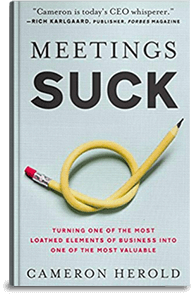
If you want the full playbook on this, pick up Meetings Suck. It’ll change how you run every meeting after you read it.